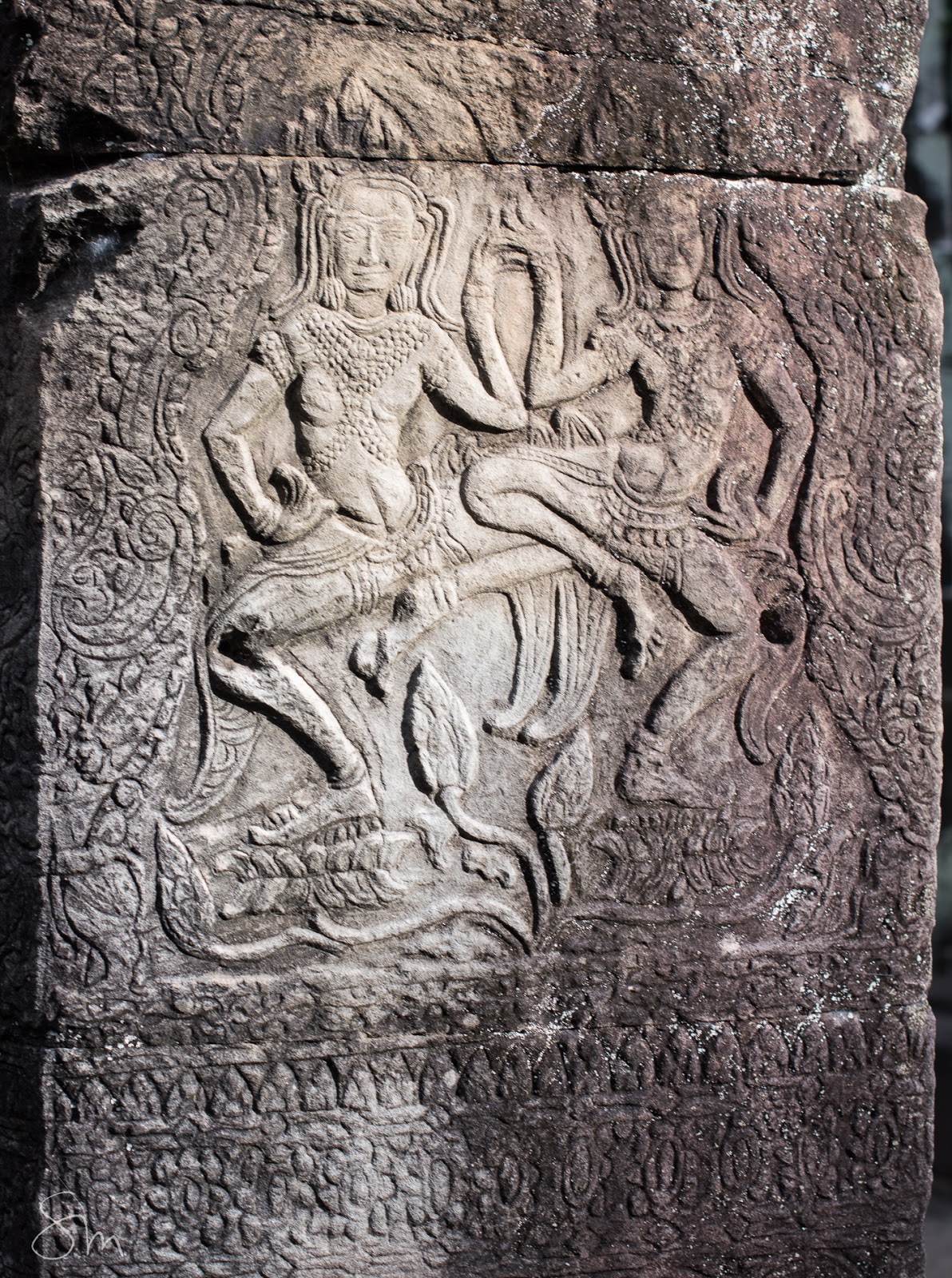
This is about two smaller temples within the Angkor complex: Ta Nei in the jungle and Banteay Kdei close to the beautiful reservoir Srah Srang east of Angkor.

Ta Nei temple was built by the famous Jayavarman VII in the late 12th century and dedicated to Buddha. It is quite overgrown. Though close to Angkor Wat we did not see too many visitors even during the christmas high season.


Banteay Kdei is another work by the great builder Jayavarman VII in the late 12th/early 13th century. It was constructed as a Buddhist temple.


Lichen, mosses and algae make those marvellous colours on the laterite and sand stone surfaces.


Past this temple the peaceful and elegant water reservoir Srah Srang from the 10th century still holding water is a good place for an idyllic rest.


Ta Nei temple was built by the famous Jayavarman VII in the late 12th century and dedicated to Buddha. It is quite overgrown. Though close to Angkor Wat we did not see too many visitors even during the christmas high season.


Banteay Kdei is another work by the great builder Jayavarman VII in the late 12th/early 13th century. It was constructed as a Buddhist temple.


Past this temple the peaceful and elegant water reservoir Srah Srang from the 10th century still holding water is a good place for an idyllic rest.

on their way to school in the early morning

even cows need a bath sometimes